
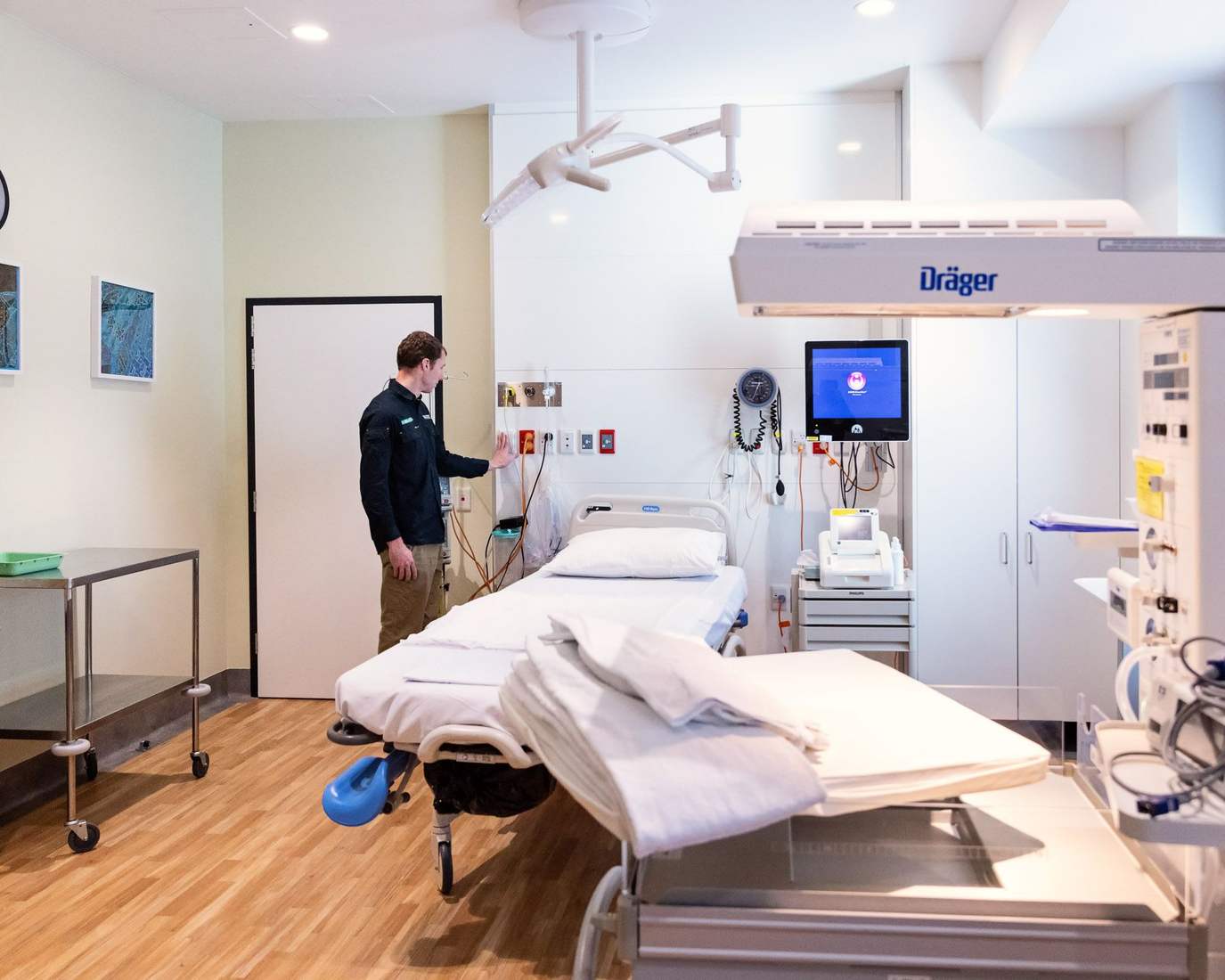
In most buildings, a tiny leakage current from a piece of equipment goes unnoticed. In a hospital it can be dangerous. When a patient is connected to medical equipment through electrodes, catheters or other applied parts, the skin’s natural protection is reduced, and currents that would be harmless elsewhere can affect the body or the heart.
That is why patient areas in Australia and New Zealand are covered by AS/NZS 3003, Electrical installations: Patient areas. It sets extra electrical safety requirements on top of the general Wiring Rules for hospitals, day surgeries, medical and dental clinics, imaging centres and other healthcare facilities.
Body-protected and cardiac-protected areas
AS/NZS 3003 recognises two levels of protection:
- Body-protected electrical areas are patient areas where medical equipment makes contact with the body. Socket outlets are protected by 10 mA medical-grade residual current devices (RCDs), or by a monitored isolated supply, so faults are cleared before they can harm a patient.
- Cardiac-protected electrical areas are used for procedures where there may be a conductive path to the heart, such as cardiac catheterisation and cardiac surgery. They need everything a body-protected area needs plus equipotential bonding, which keeps exposed metal parts at the same voltage so no harmful current can flow through the patient.
What compliance looks like on site
- Dedicated, correctly protected circuits for each protected area
- Outlets labelled with their switchboard, circuit and RCD details
- Signage at the entrance to each protected area
- Equipotential bonding in cardiac-protected areas
- Test results and certification kept on record
Testing and certification
Protected areas are tested and certified when they are installed, and again after any alteration. They also need periodic re-testing, including RCD trip-time and trip-current tests and, in cardiac-protected areas, bonding resistance checks. Most WA health facilities schedule this at least annually within their planned maintenance program. Your facility’s policy and the current standard set the exact intervals.
Common problems we find
- New outlets added during a fit-out without the required RCD protection
- RCDs that trip outside the allowed time or current
- Missing or outdated outlet labels and signage
- Rooms that have changed use without being recertified
- Missing test records, which makes compliance hard to prove at audit
Medical electrical specialists in Perth and WA
Foster’s Services installs, tests and certifies body-protected and cardiac-protected areas for hospitals and healthcare facilities across Western Australia. Our team is trained to work in live healthcare environments, and our inspection work is NATA accredited to ISO 17020. Learn more about our medical electrical services. Call 08 9337 3315, email service@fosters.net.au or send us a message. For urgent after-hours faults, call 1300 19 19 42.
This article is general information only. Always refer to the current editions of the relevant Australian Standards and your site’s own requirements.